About Me
Learn more about my vision for building next-generation computational materials science infrastructure using Rust and AI-assisted development to create self-evolving, community-maintained tools.
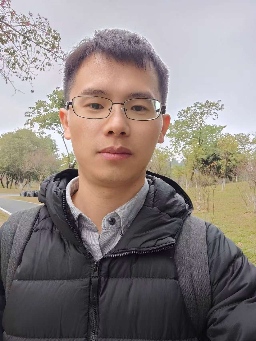
Hi, I'm Jing Zhong, a materials science researcher and computational tools developer passionate about reimagining how we build scientific software. My current mission is to establish a modern computational infrastructure for phase diagram calculations and phase transformation kinetics, leveraging Rust and AI-assisted development to create tools that can evolve and sustain themselves through community collaboration.My research journey began with HitDIC (High-throughput Determination of Interdiffusion Coefficients), a free-accessible software I developed that revolutionizes how we determine interdiffusion coefficients and atomic mobilities in alloy systems. Now, I'm taking the next step: building a new generation of materials computation tools designed from the ground up for maintainability, extensibility, and AI-assisted development.
My Vision
I believe the future of scientific software lies in AI-maintainable code infrastructure. By writing code that AI systems can understand, modify, and extend, we can create computational tools that don't just serve today's research needs but can evolve with the community for decades to come.This means:- Rust-powered performance with memory safety and fearless concurrency
- AI-friendly code architecture that enables seamless collaboration between human developers and AI assistants
- Self-documenting systems where code structure communicates intent clearly
- Community-driven evolution where tools grow and adapt through collective intelligence
What I'm Building
I'm working on a modern computational framework for:- CALPHAD-based thermodynamic and kinetic calculations
- Phase-field simulations with GPU acceleration
- High-throughput materials screening and optimization
- Automated database construction and uncertainty quantification
Why This Matters
Traditional scientific software often becomes unmaintainable as original developers move on. By designing for AI-assisted maintenance from day one, we're creating tools that can:- Onboard new contributors faster through AI-generated documentation and guided workflows
- Evolve their capabilities as AI models improve
- Self-document and self-test with AI-generated verification
- Bridge gaps between domain experts and implementation details
Beyond the Code
When I'm not pushing commits or designing architectures, you'll find me exploring the intersection of open-source communities, AI development tools, and computational materials science. I believe the best tools emerge when we make it easy for anyone—human or AI—to contribute meaningfully.Thanks for stopping by! Feel free to explore my projects and blog to learn more about my work. Materials science laboratory
 Computational research workspace